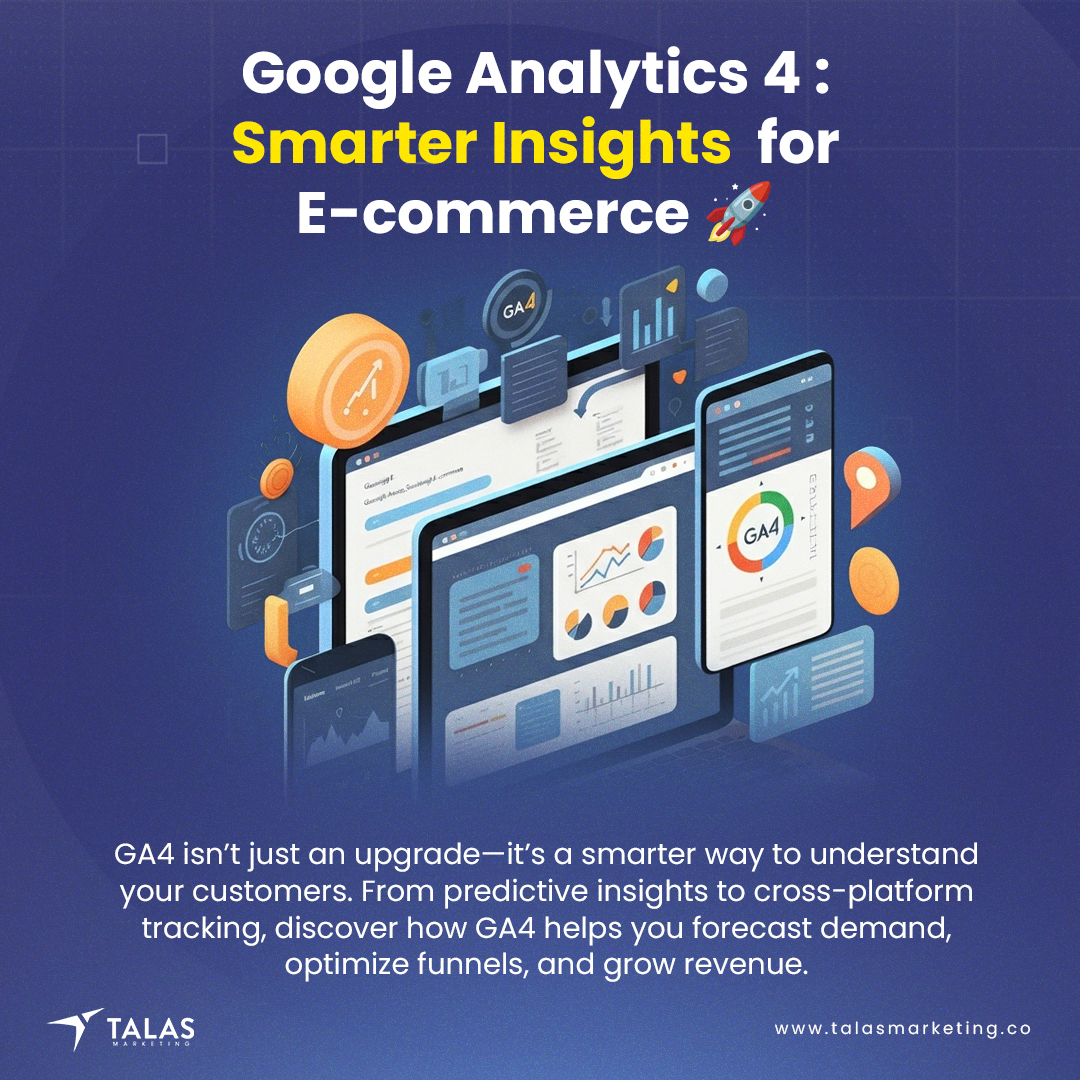
Google Analytics 4: Everything E-commerce Owners Need to Know

By Admin | March 20, 2026

Google Analytics 4: Everything E-commerce Owners Need to Know

E-commerce is growing faster than ever, and so is the need for smarter analytics. To stay ahead, online business owners must understand not just what their customers are doing, but why they’re doing it and what they’ll do next. Enter Google Analytics 4 (GA4)—Google’s new analytics platform that replaces Universal Analytics. GA4 brings a more advanced, event-based approach to tracking user behavior, offering e-commerce brands a clearer picture of the customer journey across websites, apps, and devices. For store owners, GA4 isn’t just another reporting tool—it’s the future of data-driven decision-making.

What Makes GA4 Different?

Unlike Universal Analytics, which focused on sessions and pageviews, GA4 is event-driven. Every click, scroll, view, or purchase is tracked as an “event,” giving you deeper insights into how shoppers engage with your store.

Some key features include:

  • Cross-platform tracking – Understand how customers move between devices and platforms before making a purchase.
  • AI-powered insights – Predictive metrics like purchase probability and churn likelihood help you take proactive action.
  • Enhanced measurement – Automatically track key events (like scrolls, video plays, and outbound clicks) without extra setup.
  • Privacy-first design – Built to adapt to a cookie-less future and global privacy regulations.

Why GA4 Matters for E-commerce Owners

GA4 gives online retailers the tools to:

  • Forecast demand and revenue more accurately.
  • Build smarter audiences for retargeting and ad campaigns.
  • Optimize checkout funnels by identifying where shoppers drop off.
  • Measure true ROI by linking marketing spend directly to revenue.

By focusing on user interactions rather than just page visits, GA4 allows you to create a more personalized, data-driven shopping experience.

Getting Started with GA4

For e-commerce owners, adopting GA4 means:

  • Setting up a GA4 property in your account.
  • Enabling enhanced e-commerce tracking for key actions like add-to-cart and purchases.
  • Defining conversions that align with your business goals.
  • Continuously testing and refining reports to adapt to customer behavior.

Conclusion

Google Analytics 4 isn’t just an upgrade—it’s a complete shift in how e-commerce businesses measure success. By moving to event-based tracking, integrating AI-driven predictions, and adapting to privacy-first requirements, GA4 helps store owners unlock deeper insights, smarter strategies, and long-term growth.

For e-commerce brands looking to thrive in a competitive market, adopting GA4 now will ensure you stay ahead of the curve, make smarter marketing decisions, and maximize ROI. The future of e-commerce analytics is here—don’t wait to take advantage of it.


Related Articles

April 7, 2026

Navigating the Complexity of Multi-Platform PPC Strategies: Best Practices for Leveraging Data Across Google, Facebook, and TikTok

PPC advertising in today's fast-paced digital ecosystem is evolving rapidly. Businesses now need a....
Read More
April 7, 2026

Leveraging AI and Machine Learning for Enhanced PPC Campaign Performance: Trends and Predictions

In an era where digital interactions are increasingly complex and consumer behaviors shift rapidly,....
Read More
April 7, 2026

How E-commerce Brands Can Maximize ROI with Targeted Paid Social Ads

In today’s fiercely competitive e-commerce landscape, business owners and digital marketers are under....
Read More
1 2 3 7

Speak with a Strategy Expert

At Talas, we foster a culture of trust and high-level collaboration, championing your brand’s trajectory with a sense of ownership that turns accountability into market leadership.
Please enable JavaScript in your browser to complete this form.
© 2026 Copyright - Talas Inc
linkedin facebook pinterest youtube rss twitter instagram facebook-blank rss-blank linkedin-blank pinterest youtube twitter instagram